
PREVENTION of the most FREQUENT INJURIES in FOOTBALL
Not long ago, in this News section we talked about plyometric training, which is training that requires great intensity and energy expenditure. That is why today we return to this section but to talk about the possible consequences that not stretching and/or not warming up correctly could bring us.
As you can already read in the title, today we talk about HOW TO PREVENT the most frequent INJURIES that our footballers can suffer.
ISCHIOTIBIAL INJURY.
To begin with, we want to clarify where these muscles are located:
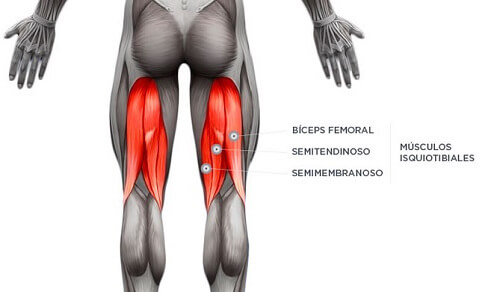
The hamstring injury is considered the most common muscle injury in footballers: 12-33% of footballers who have suffered injuries have been to these muscles. That is why at FutbolLab we want to help you prevent and ensure that your footballers do not suffer this injury.
An exercise that our teacher Emil Romero recommends is the following:
EXERCISE: We will do a DEADLIFT LIFT.
Without moving the lower body, we will have to bend down and pick up the medicine ball. For those who do this exercise at home, we can also do it with a jug of water or similar. We will perform this exercise in 4 sets of 8 repetitions.
ADDUTOR INJURY
The abductors are located on the inside of the leg. They join the pubic area with the knee:

This injury is one of the most common in players who do not warm up or stretch before starting a training session or match and then make sudden, dry movements. Even if he does not recover after an abductor injury and continues to play and perform, it may be the case that the player may suffer pubalgia. It is a long injury and there are cases in which surgical intervention is necessary.
In order to avoid injuries like this, we will do the following exercise:
EXERCISE: We will do a Open DEADLIFT LIFT.
Unlike the previous exercise, this time we will open the legs as seen in the video. We will hold the weight vertically. Again, we dig in the lower body and crouch down as if we were doing a squat. we will do 4 sets of 8 repetitions.
This exercise is also useful to prevent KNEE injuries.
QUADRICEPS INJURY
This injury is due to the same reasons as the abductor injury: sudden movements / getting stuck. Situations in which we make cuts, dry braking, powerful shots without warming up, wear and overexertion...
Let's locate the quadriceps:
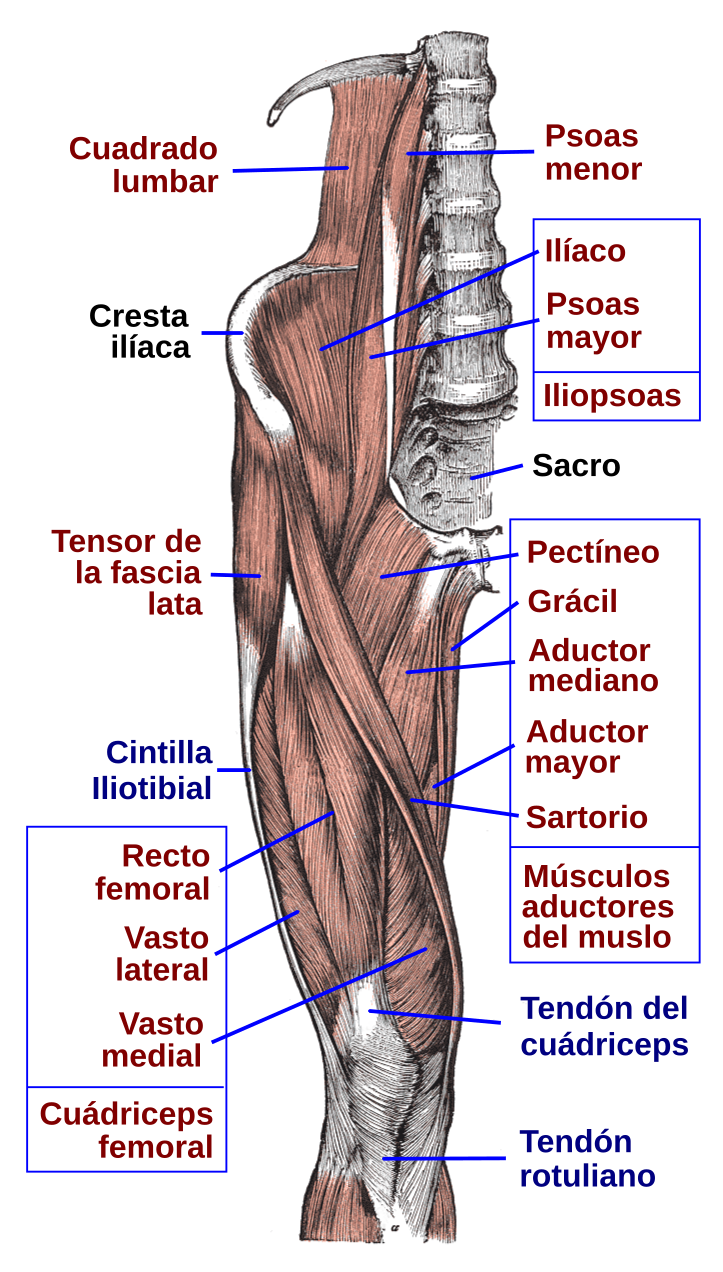
In the exercises that will show us Emil RomeroIn addition to working quadriceps we will also work abductors, hamstrings andknees.
EXERCISE: With a ball, we cross our arms on our chest and (while standing) we will bend our knees 90 degrees, holding down for 2 seconds. Next we will climb hard but without hurting ourselves. We will do this exercise in 4 sets of 10 repetitions.
ANKLE INJURY:
Sprains, strains, breaks... It is another of the most normal injuries in football, especially in forwards who face possible pushes, cuts and general contact with defenses.
Let's look at the ankle:

- EXERCISE 1: With one leg, we will support ourselves on the surface that you can see in the video and we will try to stand without falling, balancing with our arms and hands together. We will hold 15 seconds per repetition. We will do 4 sets of 10 repetitions.
- EXERCISE 2: We will do exactly the same as the previous exercise but with a more stable surface and more support space. In addition, we will also work quadriceps and hamstrings.
CALVIN INJURY:
To avoid injuries to the calves, normally caused by overloads, overexertion or very fast and sudden movements.
As always, we will first locate and analyze the twins:

EXERCISE:To perform this exercise we will need a bench or a step.
We stand on top of the bench or step and we left only the tips of the feet inside. We will make an up and down movement. When we go up, we will do and maintain strength in the calves, focusing the exercise well in our mind. we will do 4 sets of 15 repetitions.
That's it for this news! Thank you very much for reading and watching the videos. At FutbolLab, we invite you to subscribe to our YouTube channel to keep up to date with all our videos.
If you are interested in injury prevention, can check our Master in Physical Preparation doing click HERE!