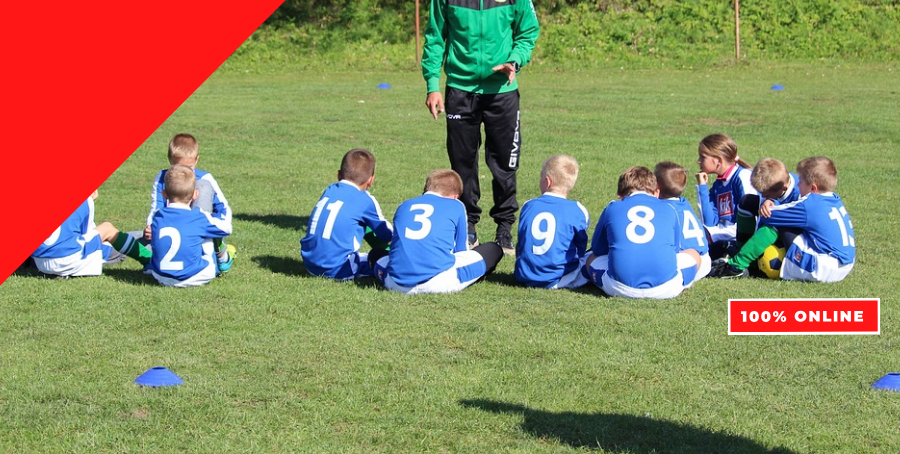
The attack is to bring the ball to the rival goal in joint action with the team once possession is recovered or the game starts. During the formative stages in grassroots football, players are instilled with a series of offensive principles to build a more organized and less random attack.
Contents
Types of attack
Combined attack:
Short passes. Speed in the circulation of the ball. Wide passes predominate.
Direct attack:
Short and long passes. Speed in the game. Deep passes predominate.
Counterattack:
Short and long passes. Speed in the game. Deep passes predominate. It seeks to exploit the free spaces caused by the absence of the adversary's collective withdrawal. It occurs after recovering the ball.
Combined attack drill
11×11 or 7x7 match.
Objective: Make at least 6, 7, 8… passes before entering zone A.
In this task, it seeks to establish its own collective patterns that will end up giving meaning to the task.
Slogans
- The game in width by forcing you to keep the ball for a long time (given the difficulty of keeping the ball in a vertical space).
- Short passes since we cannot leave the zone before the established number of passes (it is extremely difficult to keep a ball for a certain period of time through long horizontal passes).
- Speed in the circulation of the ball for the reasons stated above.
Direct attack drill
11×11 or 7x7 match.
Objective: Execute a maximum of 3, 4, 5... passes before entering zone A.
This task in itself has no value if it does not follow action patterns established by the coach based on his players and the idea to be developed.
Slogans
- Playing in depth to the detriment of breadth (since the transition from one area to another must be imminent).
- Short passes in search of free space and long passes in depth.
- Speed in the game by limiting the time of possession of the ball (through maximum passes).
Counterattack exercise
6×6 possession game.
Objective: recovery of the ball in the destabilization zone and counterattack with deep play behind the defense. After the loss of the ball, the defending team will carry out an intensive retreat.
Slogans
- After recovery, short passes to find free space (width) and long ones to find depth behind the defense.
- Speed in the game: “The ball runs faster than the player.”.
- After losing the ball, the defending team will execute an intensive withdrawal to avoid the attacking team exploiting spaces.