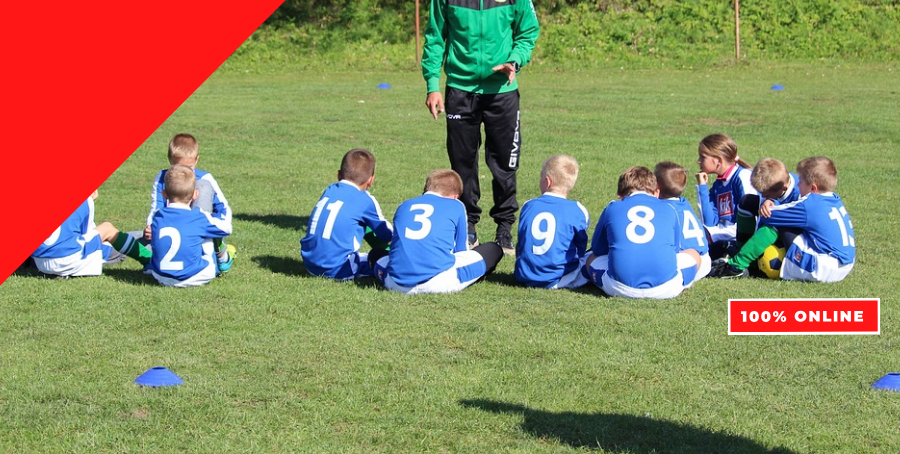
In today's football, every detail counts. The difference between winning or losing no longer depends solely on individual talent, but on how that talent is organized within a system. And that is where tactics become a determining factor.
An appropriate tactic not only organizes the team, but also gives meaning to the game, enhances its strengths and minimizes its weaknesses. It is, in essence, the bridge between the coach's idea and the players' execution on the field.
1. Improves decision making in the field:
One of the greatest benefits of working on good tactics is that players stop constantly improvising and begin to interpret the game judiciously. In high-pressure situations, where the time to decide is minimal, having tactical automation allows:
- Reduce uncertainty
- Increase reaction speed
- Always choose the most efficient option
The player does not act by intuition alone, but rather combines his talent with a structured base of knowledge of the game. This generates a more fluid, more intelligent football that is much more difficult to neutralize.
2. Enhances collective play and team cohesion
A team without tactical organization tends to fragment: separated lines, poorly occupied spaces and lack of coordination. On the other hand, when there is a clear structure, the team works as a unit.
The tactic allows:
- Synchronize movements between lines
- Coordinate pressure, withdrawal and transitions
- Create constant relationships between colleagues
This not only improves performance, but also collective confidence. Each player understands their role within the system and how their work impacts overall performance.
3. Optimizes physical performance and reduces wear and tear
- Running a lot does not mean playing well. In fact, the best organized teams are usually the most physically efficient.
- A good tactical structure:
- Avoid unnecessary efforts
- Reduce distances between players
- Allows you to recover the ball more intelligently
This translates into a team that arrives fresher at the key moments of the game. The integration between tactics and physical preparation is fundamental in modern football, since performance does not depend only on effort, but on how that effort is managed.
4. Facilitates adaptation to different game contexts
Not all games are played the same. Each rival poses different problems, and the ability to adapt is what differentiates competitive teams from those that are not.
A solid tactical base allows:
- Adjust the system according to the rival
- Modify pressure heights
- Change offensive and defensive behaviors
The team does not lose its identity, but it does gain flexibility. This ability to adapt is key in demanding competitions where every detail makes a difference.
Develop smarter, more complete players. Modern football demands players who not only execute, but understand the game. Tactical training contributes directly to this development.
5. A player with tactical knowledge:
Understand spaces and times
Knows how to interpret advantages and disadvantages
Improves your ability to anticipate
Furthermore, this learning has a direct impact on your professional growth. Game analysis and strategic thinking are increasingly valued skills within high-level football.
6. Reinforces the identity and the game model:
Tactics are not simply a disposition on the field, but the expression of an idea. It is what defines how a team wants to play, what values it transmits and how it competes.
A team with a clear tactical identity:
- Is recognizable in any game
- Maintains consistency in his game
- Transmits security and trust
- This identity facilitates long-term work, since it allows us to build a solid foundation on which to evolve season after season.
7. Improves coach analysis and planning
Tactics are also a key tool for the coaching staff. Through it, the coach can analyze the team's performance objectively and make more accurate decisions.
Allows:
- Detect structural errors
- Evaluate collective behaviors
- Plan specific workouts
In this sense, tactics become a central element within the work methodology, connecting analysis, training and competition.
Conclusion
Tactics are much more than a tool: they are the axis on which the entire game revolves. It is the way to give order to talent, to convert ideas into results and to transform a group of players into a competitive team.
Working on an appropriate tactic not only improves immediate performance, but also builds the foundation for sustainable growth over time.
Because in football, as in life, the one who has the most doesn't always win...
but the one who knows how to use it best.